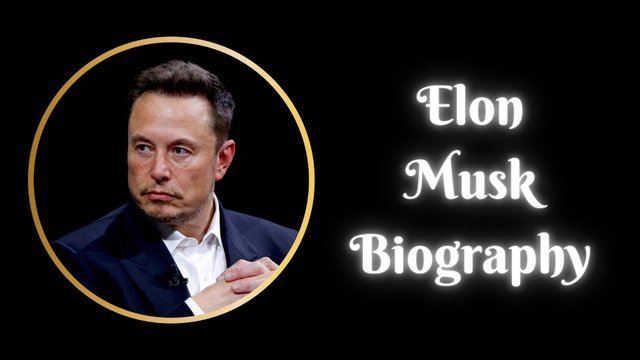
As of early 2026, Elon Musk’s net worth has reached an astronomical $840 billion, making him not just the wealthiest person alive, but the richest individual in recorded human history. This massive surge in wealth represents a “decoupling” from traditional market trends, driven by a series of high-stakes mergers and technological breakthroughs that have transformed his business empire into a unified “Muskonomy.“
While the world watches to see if he will become the first trillionaire, Musk’s financial trajectory in 2026 is no longer just about electric cars or social media—it is about the integration of orbital infrastructure, artificial intelligence, and humanoid robotics.
Elon Musk Net Worth 2026

The Anatomy of an $840 Billion Fortune
Musk’s wealth is famously volatile because it is tied almost entirely to equity in his companies rather than cash. In 2026, the composition of his fortune shifted dramatically due to the SpaceX-xAI merger.
| Asset / Company | Estimated Value (2026) | Musk’s Ownership Stake | Contribution to Net Worth |
| SpaceX-xAI Conglomerate | $1.35 Trillion | ~42% | $567 Billion |
| Tesla (TSLA) | $1.20 Trillion | ~20% (including options) | $240 Billion |
| X (formerly Twitter) | $15 Billion | ~75% | $11 Billion |
| Neuralink & The Boring Co. | $30 Billion | Various | $22 Billion |
| Total Estimated Net Worth | $840 Billion |
1. The SpaceX-xAI Merger: The “Crown Jewel”
The most significant contributor to Elon Musk’s net worth 2026 is the newly formed SpaceX-xAI entity. In late 2025, Musk merged his aerospace giant with his artificial intelligence startup to create a vertically integrated “Orbital Intelligence” powerhouse.
- Starlink & Grok Integration: Starlink’s satellite network now serves as the backbone for Grok AI, allowing for global, low-latency AI processing that doesn’t rely on terrestrial fiber optics.
- The 2026 IPO Prospectus: SpaceX has confidentially filed for what is expected to be the largest IPO in history. Analysts predict that if the public listing hits its $1.75 trillion target by late 2026, Musk’s personal net worth will surpass $1 trillion.
- Mars Progress: With Starship now conducting regular monthly flights, the valuation of SpaceX has moved from speculative venture to a mainstream infrastructure utility.
2. Tesla’s Pivot to Robotics and “Optimus”
In 2026, Tesla is no longer viewed by Wall Street as just an “EV company.” The restoration of Musk’s 2018 compensation package (valued at roughly $140 billion) by the Delaware Supreme Court in late 2025 provided a massive boost to his balance sheet.
- Optimus Gen 3: Tesla’s humanoid robot, Optimus, entered mass production in early 2026. Musk has claimed that the long-term value of Optimus will eventually exceed that of the entire automotive industry.
- The Cybercab Launch: In April 2026, Tesla officially piloted its first fleet of steering-wheel-less “Cybercabs” in select Texas cities, signaling the start of the autonomous robotaxi era.
- Energy Storage: Tesla’s Megapack business has become a primary profit driver, providing grid stability for the massive data centers required by the AI boom.
3. The Political Factor: DOGE and Government Contracts
Musk’s involvement in the second Trump administration (2025–2026) through the unofficial Department of Government Efficiency (DOGE) has had a complex impact on his wealth.
- Regulatory Streamlining: While his political stance led to some consumer boycotts of Tesla in 2025, it also paved the way for massive federal contracts. SpaceX now holds over $20 billion in active contracts with NASA and the Department of Defense.
- Efficiency Focus: Musk’s “DOGE” initiative focused on slashing federal waste, which, while controversial, solidified his influence over the nation’s technological and space-policy infrastructure.
4. Neuralink and the “Human-AI” Interface
While smaller in valuation compared to Tesla, Neuralink reached a milestone in 2026 with its 50th successful human implant. Valued at $18 billion in secondary markets, the company represents Musk’s long-term “insurance policy” against AI, aiming to merge human consciousness with digital intelligence.
Comparing the Titans: The Global Wealth Gap
In 2026, the gap between Musk and his closest competitors has reached historic proportions.
- Elon Musk: $840 Billion (SpaceX, Tesla, xAI)
- Larry Page: $281 Billion (Alphabet)
- Jeff Bezos: $253 Billion (Amazon, Blue Origin)
- Mark Zuckerberg: $222 Billion (Meta)
Analysts note that Musk is now worth more than the entire GDP of Saudi Arabia, highlighting a level of individual wealth concentration never seen in the modern era.
The Path to $1 Trillion: What Could Go Wrong?
Despite the momentum, Musk’s path to becoming a trillionaire faces significant risks:
- Antitrust Scrutiny: SpaceX’s near-monopoly on space launches (80% of U.S. payloads) has triggered bipartisan calls for regulatory intervention.
- xAI Burn Rate: Building world-class AI models is expensive. If xAI fails to monetize Grok effectively, it could drain capital from his other ventures.
- Key Man Risk: As Musk’s empire grows more complex, his “hands-on” management style across six different companies remains a point of concern for institutional investors.
Frequently Asked Questions (FAQs)
1. What is Elon Musk’s exact net worth in 2026?
As of early 2026, Elon Musk’s net worth is estimated at approximately $840 billion, though this fluctuates daily based on the private valuation of SpaceX and Tesla’s stock price.
2. When will Elon Musk become a trillionaire?
Financial analysts at Morgan Stanley and Bloomberg predict that if the SpaceX IPO occurs in late 2026 and hits its $1.75 trillion valuation target, Musk will become the world’s first trillionaire before 2027.
3. How much of Musk’s wealth comes from Tesla?
Roughly $240 billion of his net worth is tied to Tesla. While it was once his primary source of wealth, it has been eclipsed by his stake in the SpaceX-xAI conglomerate.
4. Does Elon Musk own X (Twitter) in 2026?
Yes, Musk remains the majority owner of X. While the platform’s valuation dropped significantly after his 2022 purchase, it has stabilized in 2026 as a primary data source for his AI company, xAI.
5. How many companies does Elon Musk own in 2026?
Musk actively leads or owns six major entities: Tesla, SpaceX-xAI (merged), X, Neuralink, The Boring Company, and his newly formed semiconductor venture, Terafab.